

Minimally Invasive Spine Treatment in Jaipur | Dr. Mukesh Haritwal
Spine-related problems such as slipped discs, sciatica, spinal stenosis, and chronic back or neck pain can affect a person's daily activities and quality of life. Depending on the underlying condition, treatment may involve medication, physiotherapy, lifestyle modifications, injections, or surgery. Minimally Invasive Spine Surgery (MISS) is a surgical approach that uses smaller incisions and specialized instruments to access the affected area of the spine while limiting unnecessary damage to surrounding tissues.
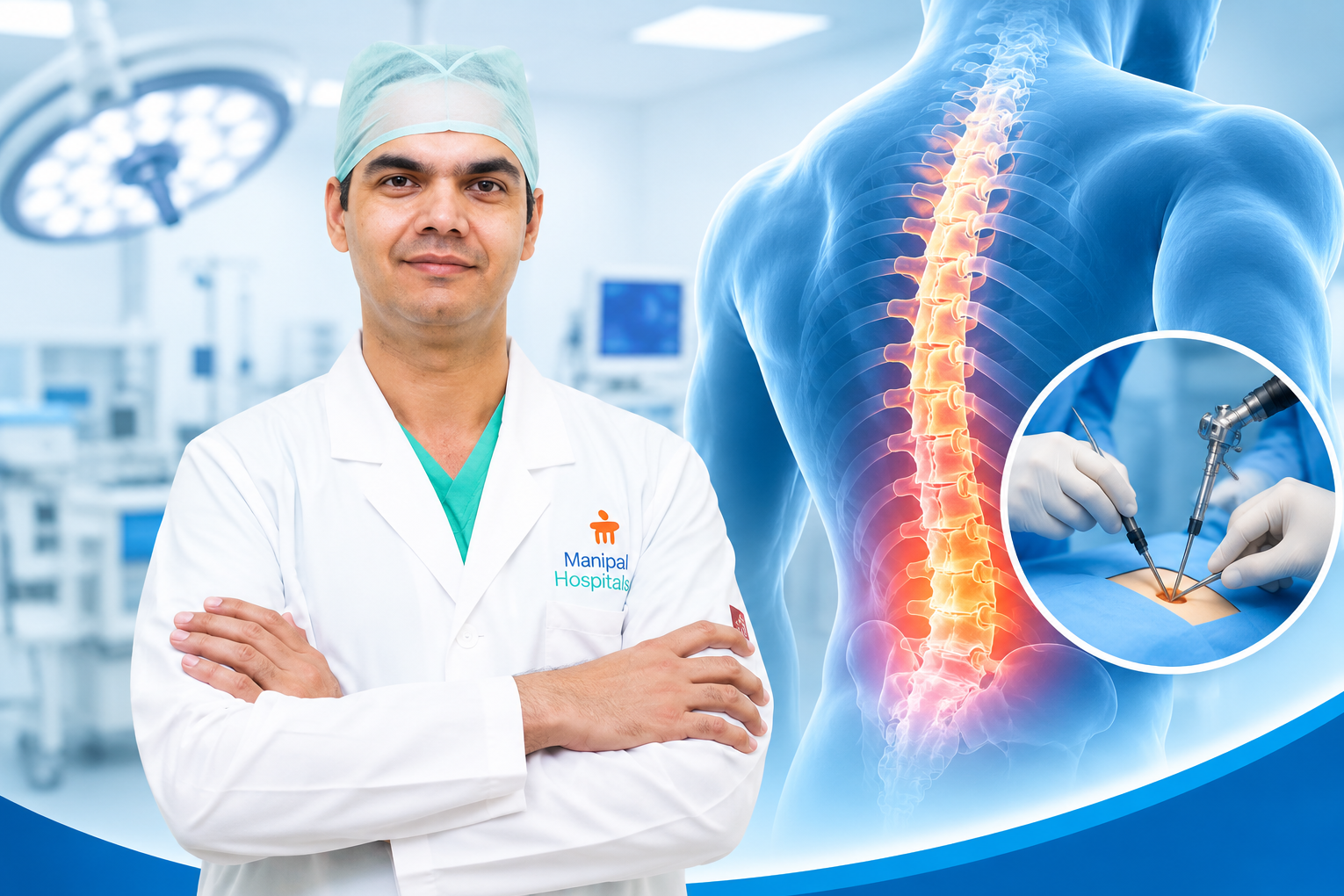
For patients looking for Minimally Invasive Spine Treatment in Jaipur, Dr. Mukesh Haritwal provides consultation, diagnosis, and surgical management for various spinal conditions. With qualifications in MBBS, MS Orthopaedics, and FNB Spine Surgery, he focuses on selecting an appropriate treatment approach according to each patient's medical condition.
What Is Minimally Invasive Spine Surgery?
Minimally Invasive Spine Surgery (MISS) is a modern surgical technique used to treat selected spinal disorders through small incisions. Unlike conventional open spine surgery, which may require greater exposure of muscles and surrounding tissues, minimally invasive procedures use specialized instruments, tubular retractors, microscopes, or endoscopic cameras to reach the affected area.
The surgeon works through a smaller surgical opening to address the underlying spinal problem. Depending on the procedure, this approach may help reduce muscle disruption, blood loss, postoperative discomfort, and recovery time.
However, the suitability of minimally invasive surgery depends on the patient's diagnosis, spinal anatomy, and overall health.
Conditions Treated with Minimally Invasive Spine Surgery
Several spinal conditions may be managed using minimally invasive techniques when clinically appropriate.
1. Slipped Disc (Herniated Disc)
A slipped disc occurs when the soft inner material of an intervertebral disc pushes through its outer layer and may compress nearby nerves. It can cause back pain, leg pain, tingling, numbness, or weakness. Endoscopic discectomy and microdiscectomy may be considered for selected patients.
2. Sciatica
Sciatica refers to pain that travels from the lower back through the buttock and into one or both legs. It commonly develops due to irritation or compression of the sciatic nerve. Treatment depends on the cause and severity of symptoms.
3. Spinal Stenosis
Spinal stenosis is the narrowing of the spinal canal or nerve passageways, which can put pressure on spinal nerves. Patients may experience back pain, leg discomfort, numbness, or difficulty walking. Minimally invasive decompression may be considered in suitable cases.
4. Degenerative Spine Disorders
Age-related changes in spinal discs, joints, and surrounding structures can lead to chronic pain and reduced mobility. Treatment may include non-surgical management or selected surgical procedures.
5. Spinal Fractures
Certain spinal fractures may require stabilization to maintain spinal alignment and protect nearby nerves. Depending on the fracture pattern, minimally invasive fracture fixation or kyphoplasty may be considered.
Types of Minimally Invasive Spine Procedures
Dr. Mukesh Haritwal has expertise in different minimally invasive spine procedures, including:
- Endoscopic Discectomy: Uses a small camera and specialized instruments to remove disc material compressing a nerve.
- Microdiscectomy: Removes the portion of a herniated disc responsible for nerve compression using magnification.
- MIS Decompression: Relieves pressure on spinal nerves by removing selected structures causing compression.
- MIS TLIF / Fusion Surgery: Stabilizes the affected spinal segment and promotes fusion between vertebrae when required.
- Minimally Invasive Fracture Fixation: Uses specialized instruments and implants to stabilize selected spinal fractures.
- Kyphoplasty: A procedure used for selected vertebral compression fractures to help restore vertebral height and stabilize the affected bone.
The choice of procedure depends on the patient's clinical findings and diagnostic reports.
Benefits of Minimally Invasive Spine Treatment
When appropriate for a patient's condition, minimally invasive spine surgery may offer several benefits compared with conventional open surgery.
Smaller Surgical Incisions: Smaller incisions are used to access the affected spinal area.
Reduced Muscle Disruption: Specialized instruments help minimize unnecessary disturbance to surrounding muscles and soft tissues.
Less Blood Loss: Selected minimally invasive procedures may involve less blood loss.
Reduced Postoperative Discomfort: Limited tissue disruption may help reduce discomfort after surgery.
Early Mobilization: Some patients may be able to start walking and moving earlier after the procedure, depending on the surgery performed.
Shorter Hospital Stay: Certain procedures may allow patients to leave the hospital sooner than conventional open surgery.
Recovery and Rehabilitation: Patients may return to routine activities according to their healing progress and the surgeon's recommendations.
These benefits are not guaranteed and vary according to the procedure and individual medical condition.
Minimally Invasive Spine Surgery vs. Open Spine Surgery
Conventional open spine surgery generally involves a larger incision and greater exposure of the affected spinal structures. Minimally invasive spine surgery uses smaller surgical openings and specialized instruments to reach the treatment area.
Both approaches have specific indications. While minimally invasive techniques may be suitable for many spinal conditions, complex deformities, extensive spinal infections, tumours, and certain traumatic injuries may require open or combined surgical approaches.
A spine specialist evaluates the patient's condition before recommending the appropriate surgical method.
Why Choose Dr. Mukesh Haritwal for Spine Treatment in Jaipur?
Dr. Mukesh Haritwal is an orthopaedic spine surgeon in Jaipur with specialized training in spine surgery. He holds MBBS, MS Orthopaedics, and FNB Spine Surgery qualifications and has experience managing different spinal conditions.
His areas of clinical expertise include:
- Minimally Invasive Spine Surgery
- Endoscopic Discectomy
- Microdiscectomy
- Minimally Invasive Decompression
- MIS TLIF and Fusion Surgery
- Spinal Fracture Management
- Degenerative Spine Disorders
- Spinal Deformity and Complex Spine Conditions
He focuses on understanding each patient's symptoms, medical history, and diagnostic findings before recommending a treatment plan.
Dr. Mukesh Haritwal consults at Manipal Hospital, Main Sikar Road, Vidhyadhar Nagar, Jaipur, Rajasthan.
When Should You Consult a Spine Specialist?
Persistent back pain, neck pain, pain radiating into the arms or legs, numbness, tingling, or difficulty walking may indicate an underlying spinal problem. Medical evaluation can help identify the cause and determine whether conservative treatment or surgery is required.
Sudden loss of bladder or bowel control, numbness around the groin or saddle region, or rapidly progressing leg weakness requires immediate emergency medical assessment.
Early evaluation can help patients understand their condition and available treatment options.
Book a Consultation for Minimally Invasive Spine Treatment in Jaipur
If you are experiencing persistent back pain, neck pain, sciatica, slipped disc symptoms, or other spine-related problems, consult a qualified spine specialist for an appropriate diagnosis and treatment plan.
Dr. Mukesh Haritwal provides consultation and treatment for various spinal disorders, including minimally invasive and endoscopic spine surgery when medically suitable.
Doctor: Dr. Mukesh Haritwal
Qualification: MBBS, MS Orthopaedics, FNB Spine Surgery
Speciality: Spine Surgeon
Hospital: Manipal Hospital, Main Sikar Road, Vidhyadhar Nagar, Jaipur, Rajasthan
Contact: +91 94608 49639
Take an informed step towards better spine health with an individual evaluation and treatment plan.
Frequently Asked Questions (FAQs)
1. What is minimally invasive spine surgery?
Minimally invasive spine surgery is a surgical approach that uses smaller incisions and specialized instruments to treat selected spinal conditions while limiting unnecessary damage to surrounding tissues.
2. Is minimally invasive spine surgery suitable for slipped disc treatment?
Yes, selected patients with a herniated or slipped disc may benefit from procedures such as endoscopic discectomy or microdiscectomy. A specialist evaluation is necessary to determine suitability.
3. How long does recovery take after minimally invasive spine surgery?
Recovery depends on the type of surgery, the severity of the spinal condition, and the patient's overall health. Some patients resume routine activities earlier, while others require a longer rehabilitation period.
4. Does every patient with back pain require spine surgery?
No. Many patients improve with medication, physiotherapy, exercise, and lifestyle modifications. Surgery is considered when conservative treatment is insufficient or when specific clinical indications require an operation.
5. Who performs minimally invasive spine surgery in Jaipur?
Dr. Mukesh Haritwal is an orthopaedic spine surgeon in Jaipur with specialized training in spine surgery and experience in minimally invasive and endoscopic spine procedures.
6. Where can I consult Dr. Mukesh Haritwal in Jaipur?
Dr. Mukesh Haritwal consults at Manipal Hospital, Main Sikar Road, Vidhyadhar Nagar, Jaipur. For appointment-related enquiries, contact +91 94608 49639.