


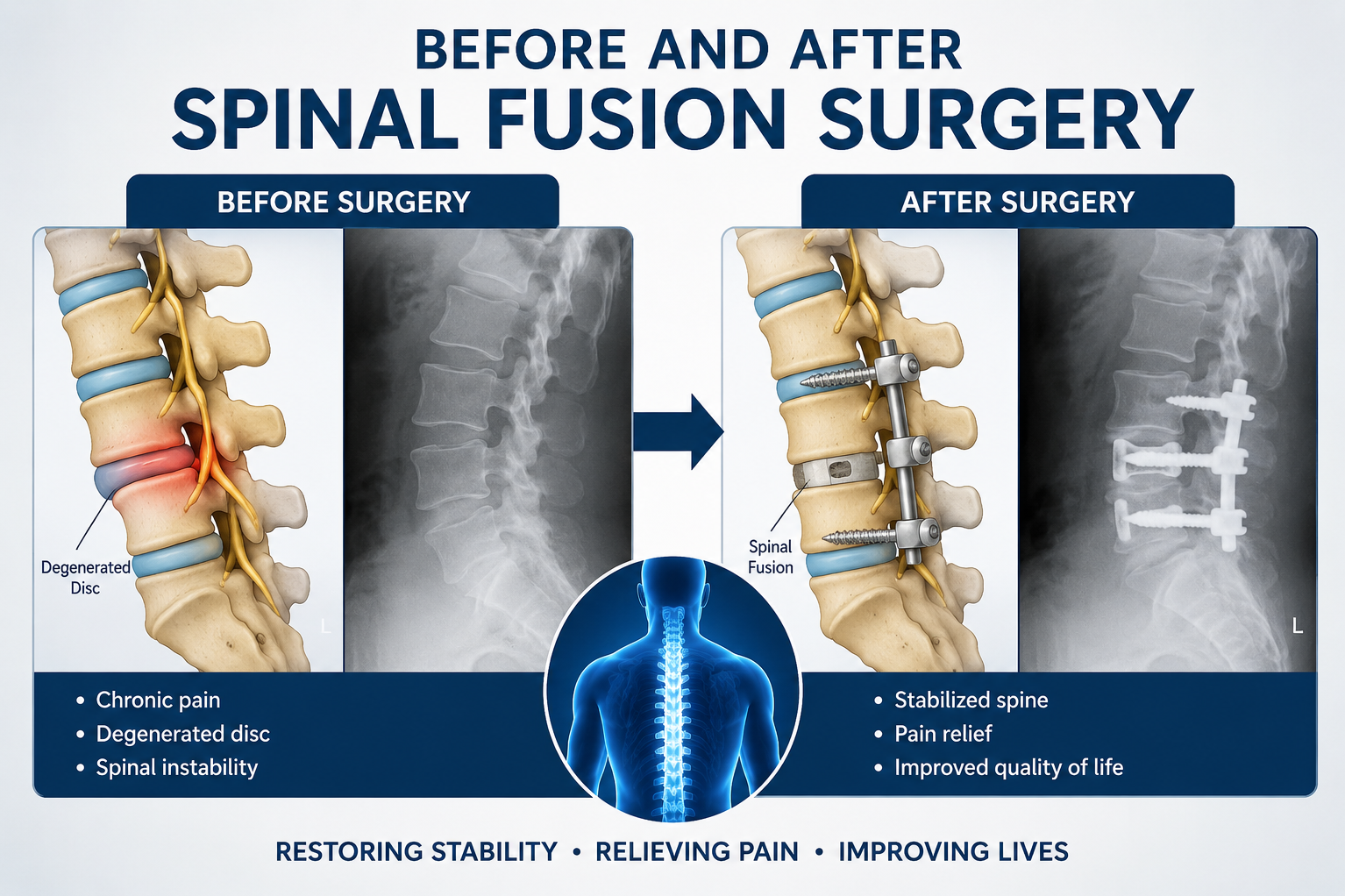
Before and After Spinal Fusion Surgery: What Patients Can Expect
Before and After Spinal Fusion Surgery in Jaipur – Dr. Mukesh Haritwal
Spinal fusion surgery is an advanced procedure used to stabilize the spine, relieve pain caused by certain spinal conditions, and restore spinal alignment when conservative treatments are no longer effective. Understanding what happens before and after spinal fusion surgery can help patients and families prepare for the procedure and recovery process.
Dr. Mukesh Haritwal is an experienced spine surgeon with experience of around 5,000 spine surgeries. He performs a wide range of anterior and posterior spine procedures from the occiput to the sacrum, managing complex spinal conditions including trauma, deformity, infection, degenerative disorders, tumors, and congenital abnormalities.
What Is Spinal Fusion Surgery?
Spinal fusion is a surgical procedure in which two or more vertebrae are joined together to create a stable segment of the spine. Depending on the patient's condition, the surgeon may use bone grafts, screws, rods, plates, cages, or other spinal implants.
The objective is to:
- Stabilize an unstable spinal segment
- Correct certain spinal deformities
- Reduce painful movement between vertebrae
- Protect or decompress affected nerves when required
- Restore appropriate spinal alignment
- Support healing after certain fractures or spinal conditions
Not every patient with back or neck pain requires spinal fusion. A spine specialist evaluates the symptoms, imaging findings, neurological condition, and overall health before recommending surgery.
Before Spinal Fusion Surgery
Preparation before spinal fusion is an important part of achieving a safe and successful outcome. The exact preparation varies according to the patient's diagnosis, age, medical history, and type of fusion planned.
1. Detailed Spine Evaluation
Before surgery, the surgeon evaluates the patient's symptoms, medical history, neurological status, and previous treatments. Imaging such as X-rays, MRI, CT scans, or other investigations may be recommended to understand the condition of the spine.
2. Understanding the Surgical Plan
Patients should understand why fusion is being recommended, which spinal levels may be treated, the surgical approach, expected benefits, possible risks, and the anticipated recovery period.
3. Medical Assessment
Routine pre-operative evaluation may include blood tests, cardiac assessment, anesthesia evaluation, and other investigations depending on the patient's age and medical condition.
4. Medication Review
Patients should inform their surgeon about all medicines, supplements, and other treatments they are taking. Some medications may need to be adjusted before surgery under medical supervision.
5. Preparing for Recovery
Patients may benefit from arranging assistance at home, organizing medications, preparing a comfortable sleeping area, and following the surgeon's instructions regarding activity, nutrition, and hospital admission.
What Happens During Spinal Fusion Surgery?
The surgical approach depends on the location and underlying problem. Spinal fusion can be performed through different approaches, including anterior, posterior, or other minimally invasive or specialized techniques when appropriate.
During surgery, the surgeon stabilizes the affected spinal segment using appropriate implants and bone graft material. In selected cases, nerve or spinal cord decompression may also be performed.
The goal is to create a stable environment that allows the vertebrae to gradually fuse during the healing process.
After Spinal Fusion Surgery
Recovery after spinal fusion is gradual and differs from patient to patient. Factors such as the number of spinal levels treated, surgical technique, overall health, age, bone quality, and the underlying condition can influence recovery.
Immediately After Surgery
After surgery, the medical team monitors the patient's pain, neurological status, wound, mobility, and general condition. Depending on the procedure and individual recovery, the patient may begin sitting, standing, and walking with assistance.
Pain and stiffness around the surgical area can occur during the early recovery period. Medications and other measures are used to keep discomfort under control.
Early Recovery
Patients are generally encouraged to gradually increase mobility according to their surgeon's instructions. Walking is often an important component of early rehabilitation.
Patients should avoid activities that place excessive stress on the healing spine and should follow restrictions regarding lifting, bending, twisting, driving, and returning to work.
Rehabilitation and Physiotherapy
When recommended by the treating team, physiotherapy can help improve mobility, strength, posture, flexibility, and functional recovery. Rehabilitation is generally progressed gradually rather than rushed.
Bone Fusion Takes Time
One important point about spinal fusion recovery is that the surgical wound may heal before the spinal fusion is completely mature. Bone fusion develops progressively over time. Follow-up appointments and imaging may be used to monitor healing and spinal alignment.
Before and After Spinal Fusion Surgery: Expected Changes
The purpose of spinal fusion is not simply to perform surgery but to improve stability and address the underlying spinal problem.
Depending on the original condition, patients may experience:
- Reduction in certain types of spinal pain
- Improved spinal stability
- Better posture or alignment in selected deformity cases
- Improvement in nerve-related symptoms when appropriate decompression is performed
- Improved ability to perform daily activities over time
However, results vary according to the diagnosis and individual circumstances. Recovery should be assessed based on the patient's specific surgical goals rather than comparing one patient's recovery with another.
Recovery Timeline After Spinal Fusion
Every patient's recovery is different. A general recovery pattern may include:
Hospital Recovery: Initial monitoring, pain management, and gradual mobilization.
First Few Weeks: Gradual increase in walking and daily activities according to medical advice.
Following Weeks to Months: Progressive rehabilitation and return to appropriate activities.
Long-Term: Continued monitoring of fusion, spinal alignment, neurological recovery, and functional improvement.
The treating spine surgeon provides individualized instructions regarding work, exercise, driving, lifting, and other activities.
When Should You Contact Your Doctor After Surgery?
Patients should promptly contact their treating medical team if they develop concerning symptoms such as:
- Increasing or severe pain that is not controlled
- New or worsening weakness or numbness
- Difficulty walking
- Problems with bladder or bowel control
- Fever or signs of infection
- Excessive wound drainage or redness
- Any sudden or unusual neurological symptoms
These symptoms do not necessarily indicate a complication, but they require timely medical assessment.
Who May Need Spinal Fusion Surgery?
Spinal fusion may be considered in selected patients with conditions such as:
- Spinal instability
- Certain degenerative spinal disorders
- Spondylolisthesis
- Selected spinal deformities
- Certain spinal fractures and trauma
- Spinal infections
- Certain spinal tumors
- Congenital spinal abnormalities
- Other complex conditions requiring stabilization
The decision for surgery should always be based on an individual clinical evaluation.
Why Choose an Experienced Spine Surgeon?
Complex spinal conditions can require detailed planning and specialized surgical expertise. An experienced spine surgeon can evaluate the condition comprehensively and determine whether non-surgical treatment, decompression, stabilization, fusion, or another procedure is appropriate.
Dr. Mukesh Haritwal is a spine surgeon with experience of around 5,000 spine surgeries and expertise in managing a broad spectrum of spinal disorders. He performs anterior and posterior spine surgeries from the occiput to the sacrum, including procedures for trauma, deformity, infection, degenerative conditions, tumors, and congenital spinal disorders.
Frequently Asked Questions:
Is spinal fusion surgery painful?
Some pain and stiffness are expected during the early recovery period. Pain management is an important part of post-operative care, and discomfort generally changes as healing progresses.
How long does it take to recover from spinal fusion?
Recovery varies significantly depending on the type and extent of surgery and the patient's overall health. Some activities may resume relatively early, while complete spinal fusion and rehabilitation can take considerably longer.
Can I walk after spinal fusion surgery?
Many patients are encouraged to begin walking gradually after surgery when medically appropriate. The timing and amount of activity depend on the specific procedure and the surgeon's instructions.
Does spinal fusion completely eliminate back pain?
Spinal fusion is designed to address a specific spinal problem, but it cannot guarantee complete elimination of all back pain. Outcomes depend on the underlying diagnosis and individual patient factors.
Is spinal fusion always necessary?
No. Many spinal conditions can be managed without surgery. Fusion is considered when it is medically appropriate and the expected benefits outweigh the potential risks.
Conclusion
Knowing what to expect before and after spinal fusion surgery can make the treatment journey easier to understand and prepare for. Proper diagnosis, careful surgical planning, appropriate post-operative care, rehabilitation, and regular follow-up all contribute to recovery.
For patients with complex spinal conditions, consultation with an experienced spine surgeon is important to understand the available treatment options and whether spinal fusion is appropriate.
Dr. Mukesh Haritwal – Spine Surgeon provides evaluation and surgical management for a wide range of spinal disorders, with experience of around 5,000 spine surgeries and expertise in anterior and posterior spine procedures from the occiput to the sacrum.