

Endoscopic Discectomy for Herniated Disc in Jaipur | Dr. Mukesh Kumar Haritwal
A herniated disc, commonly known as a slipped disc, can cause persistent back pain, neck pain, sciatica, numbness, tingling, and weakness. When the soft inner portion of a spinal disc protrudes through its outer layer, it may compress nearby nerves and interfere with everyday activities. For suitable patients, endoscopic discectomy in Jaipur is a minimally invasive surgical option that may help relieve symptoms caused by nerve compression.
Dr. Mukesh Kumar Haritwal, a spine surgeon in Jaipur, provides evaluation and treatment for slipped discs and other spinal conditions. His treatment approach focuses on accurate diagnosis, understanding each patient's symptoms, and selecting an appropriate treatment plan.
What Is Endoscopic Discectomy?
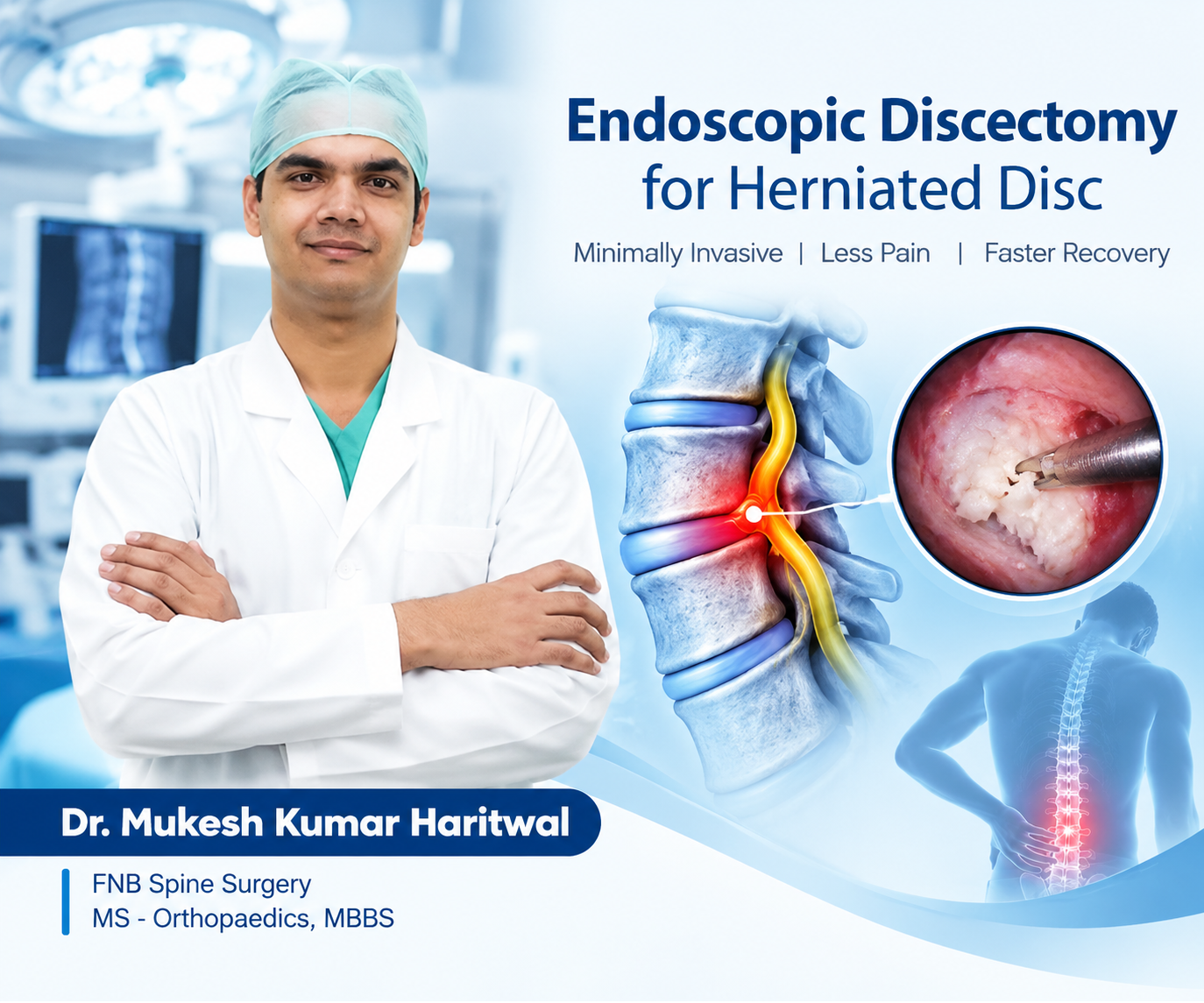
Endoscopic discectomy is a minimally invasive spine surgery used to treat selected cases of herniated or slipped discs. The procedure uses a specialised camera called an endoscope and small surgical instruments to access the affected area of the spine through a small incision.
The surgeon identifies the portion of the disc compressing a spinal nerve and removes the problematic disc material when appropriate. By using a minimally invasive approach, the procedure aims to limit disruption to the surrounding muscles and tissues.
The suitability of endoscopic discectomy depends on the location of the herniated disc, the severity of nerve compression, MRI findings, and the patient's overall health.
Common Symptoms of a Herniated Disc
A herniated disc can produce different symptoms depending on its location and the nerves affected. Common symptoms include:
- Persistent lower back or neck pain
- Pain radiating from the lower back into the buttocks or legs
- Sciatica caused by irritation or compression of a spinal nerve
- Tingling or numbness in the arms, hands, legs, or feet
- Muscle weakness affecting walking or daily activities
- Pain that increases during certain movements, coughing, or sneezing
Not every herniated disc causes symptoms, and not every patient requires surgery. A clinical examination and appropriate imaging help determine the cause of the problem.
When Is Endoscopic Discectomy Recommended?
Many patients with a slipped disc improve with non-surgical treatment. Depending on the diagnosis, treatment may include medication, physiotherapy, activity modification, and other conservative approaches.
Endoscopic discectomy may be considered when:
- Back or leg pain persists despite appropriate conservative treatment.
- A herniated disc causes significant nerve compression.
- Sciatica continues to interfere with work, sleep, or everyday activities.
- Examination and MRI findings support the need for surgical treatment.
- The patient is an appropriate candidate for an endoscopic procedure.
The final decision should be made after a detailed assessment by a qualified spine surgeon.
How Is Endoscopic Discectomy Performed?
The procedure generally involves several steps:
1. Preoperative evaluation: The surgeon reviews the patient's medical history, symptoms, physical examination findings, and imaging reports.
2. Anaesthesia and positioning: Appropriate anaesthesia is administered, and the patient is positioned according to the planned surgical approach.
3. Endoscopic access: A small incision is made to introduce the endoscope and specialised instruments towards the affected disc.
4. Removal of the herniated disc material: Using the camera for visual guidance, the surgeon removes the disc fragment responsible for nerve compression.
5. Recovery and monitoring: The patient is monitored after surgery, and the care team provides instructions for movement, wound care, activity, and follow-up.
The exact technique and recovery plan vary according to the patient's condition and the type of procedure performed.
Benefits of Endoscopic Discectomy
For appropriately selected patients, endoscopic discectomy may offer several potential advantages compared with conventional open surgery:
- A smaller surgical incision
- Less disruption to surrounding muscles and soft tissues
- Potentially reduced postoperative discomfort
- A shorter hospital stay in suitable cases
- Potentially earlier return to routine activities
These benefits are not guaranteed for every patient. Recovery time and outcomes depend on the severity of the condition, the presence of nerve damage, overall health, and the specific surgical technique.
Endoscopic Discectomy vs. Conventional Disc Surgery
Endoscopic discectomy uses a camera and specialised instruments through a small access point. Conventional surgery may require a different surgical exposure depending on the underlying spinal problem.
Both approaches aim to address the cause of nerve compression when surgery is indicated. However, endoscopic surgery is not suitable for every type of disc herniation. A spine surgeon can explain the benefits, limitations, alternatives, and potential risks of each approach.
Why Consult Dr. Mukesh Kumar Haritwal in Jaipur?
Choosing an appropriate spine specialist is an important step when considering treatment for a herniated disc. Dr. Mukesh Kumar Haritwal evaluates patients with slipped discs, sciatica, back pain, and other spinal disorders.
His approach includes:
- Assessment of symptoms and neurological function
- Review of relevant MRI and diagnostic findings
- Evaluation of non-surgical and surgical treatment options
- Consideration of minimally invasive procedures when appropriate
- Individualised postoperative guidance and follow-up
Patients seeking an endoscopic discectomy surgeon in Jaipur can consult Dr. Mukesh Kumar Haritwal to understand their diagnosis and available treatment options.
Recovery After Endoscopic Discectomy
Recovery varies from person to person. Some patients may begin walking soon after surgery when medically appropriate, while others may require additional monitoring or rehabilitation.
Following the surgeon's instructions is essential. Patients may be advised to gradually increase activity, avoid heavy lifting during the initial recovery period, maintain proper posture, and attend follow-up appointments.
Physiotherapy or specific exercises may be recommended depending on the patient's condition. Persistent symptoms, new weakness, or other unexpected changes should be reported to the treating doctor.
Is Endoscopic Discectomy Safe?
Like every surgical procedure, endoscopic discectomy has potential risks. These may include infection, bleeding, nerve injury, spinal fluid leakage, persistent pain, recurrent disc herniation, or the need for additional surgery.
A thorough preoperative assessment helps the surgeon determine whether the potential benefits outweigh the risks for an individual patient. Patients should discuss their medical history, expectations, and concerns before making a treatment decision.
Seek emergency medical care if back pain is accompanied by new difficulty passing urine, loss of bladder or bowel control, numbness around the groin or saddle area, or rapidly worsening leg weakness. These symptoms can indicate serious nerve compression requiring urgent assessment.
Consult Dr. Mukesh Kumar Haritwal for Herniated Disc Treatment in Jaipur
Living with persistent back pain or sciatica can affect mobility, sleep, work, and quality of life. Early evaluation can help identify the underlying cause and determine whether conservative treatment or surgery is appropriate.
Dr. Mukesh Kumar Haritwal offers spine consultations in Jaipur for patients experiencing slipped disc symptoms and other spinal problems. If endoscopic discectomy is being considered, a personalised assessment can help establish whether the procedure is suitable and explain the expected benefits, risks, and recovery process.
Doctor: Dr. Mukesh Kumar Haritwal
Speciality: Spine Surgery and Minimally Invasive Spine Surgery
Location: Manipal Hospital, Sikar Road, Vidyadhar Nagar, Jaipur, Rajasthan
Consult a qualified spine specialist for an individualised diagnosis and treatment plan.