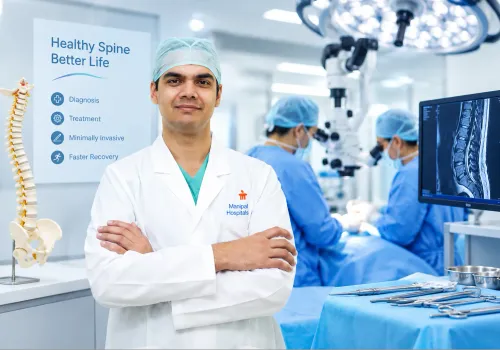


Minimally Invasive Spine Decompression for Nerve Compression – Dr. Mukesh Haritwal
Persistent back pain, neck pain, numbness, tingling, or weakness in the arms and legs can sometimes indicate pressure on the spinal nerves. When this pressure becomes severe, it may interfere with everyday activities such as walking, sitting, standing, or sleeping.
Minimally invasive spine decompression is an advanced surgical approach designed to relieve pressure on spinal nerves while minimizing damage to the surrounding muscles and soft tissues.
For patients experiencing nerve compression due to conditions such as spinal stenosis or a herniated disc, this treatment may offer an effective option when conservative treatments fail.
Dr. Mukesh Haritwal, a spine surgeon in Jaipur, provides specialized evaluation and treatment for a range of spinal disorders. Understanding the causes, symptoms, and treatment options for nerve compression can help patients make informed decisions about their spine health.
What Is Minimally Invasive Spine Decompression?
Minimally invasive spine decompression is a surgical procedure that creates additional space around compressed spinal nerves using specialized instruments and smaller incisions.
The spinal canal and nerve openings may become narrowed due to age-related degeneration, disc herniation, thickened ligaments, or bone spurs. This narrowing can place pressure on the nerves and cause pain, numbness, tingling, or weakness.
During decompression surgery, the surgeon carefully removes or reduces the structures responsible for nerve compression while preserving as much healthy tissue as possible.
Unlike traditional open spine surgery, minimally invasive techniques use smaller incisions and specialized instruments to access the affected area. Depending on the patient's condition, the procedure may involve microscopic or endoscopic visualization.
The primary goal is to relieve nerve pressure, improve mobility, and reduce symptoms associated with nerve compression.
Common Causes of Spinal Nerve Compression
Nerve compression can develop due to several spinal conditions. Identifying the underlying cause is essential for selecting the most appropriate treatment.
1. Lumbar Spinal Stenosis
Lumbar spinal stenosis occurs when the spinal canal in the lower back becomes narrower. This narrowing may compress the nerves responsible for movement and sensation in the legs.
Common symptoms include:
- Lower back pain
- Leg pain while walking
- Numbness or tingling in the legs
- Muscle weakness
- Difficulty standing or walking for extended periods
2. Herniated or Slipped Disc
A herniated disc occurs when the soft inner material of a spinal disc pushes through its outer layer. The displaced material may press against nearby spinal nerves.
Patients may experience sciatica, shooting leg pain, numbness, or weakness.
In selected cases, minimally invasive decompression or discectomy may help remove the portion of the disc responsible for nerve compression.
3. Degenerative Spine Disorders
As people age, spinal discs may lose hydration and height. Bone spurs and changes in the spinal joints may also develop.
These degenerative changes can reduce the space available for spinal nerves, leading to chronic discomfort and restricted movement.
4. Foraminal Stenosis
The neural foramina are small openings through which spinal nerves exit the spinal canal.
When these openings become narrowed, the exiting nerves may become compressed. A procedure called foraminotomy may be considered to enlarge the opening and reduce pressure on the affected nerve.
Symptoms That May Indicate Nerve Compression
Spinal nerve compression can produce different symptoms depending on the location and severity of the problem.
Common warning signs include:
- Persistent back or neck pain
- Pain radiating into the arms or legs
- Tingling or pins-and-needles sensations
- Numbness in the hands, feet, or legs
- Muscle weakness
- Difficulty walking or maintaining balance
- Reduced ability to perform everyday activities
Not every patient with these symptoms requires surgery. A proper clinical evaluation is necessary to determine whether the symptoms are caused by nerve compression and which treatment is appropriate.
How Does Minimally Invasive Spine Decompression Work?
The procedure is planned according to the patient's diagnosis, spinal anatomy, and severity of nerve compression.
Step 1: Detailed Evaluation
The spine surgeon reviews the patient's symptoms, medical history, and physical examination findings.
Diagnostic investigations such as MRI, CT scans, or X-rays may be recommended to identify the exact location and cause of nerve compression.
Step 2: Surgical Planning
Once the affected spinal level is identified, the surgeon determines the most suitable decompression technique.
Depending on the condition, the procedure may involve minimally invasive laminotomy, laminectomy, foraminotomy, or discectomy.
Step 3: Minimally Invasive Access
A small incision is made near the affected spinal region.
Specialized instruments, such as tubular retractors or an endoscope, may be used to reach the compressed nerve while limiting disruption to surrounding muscles.
Step 4: Relieving Nerve Pressure
The surgeon carefully removes the specific bone, disc material, or thickened tissue causing compression.
The objective is to create sufficient space for the nerve without unnecessarily disturbing healthy spinal structures.
Step 5: Postoperative Monitoring
After the procedure, the patient is monitored and receives instructions regarding movement, wound care, medication, and rehabilitation.
The length of hospital stay and recovery period depend on the specific procedure and the patient's overall health.
Benefits of Minimally Invasive Spine Decompression
When performed in appropriately selected patients, minimally invasive decompression may offer several advantages over conventional open surgery.
Smaller Surgical Incisions
The procedure uses smaller incisions, which may result in smaller scars and less disruption to surrounding tissues.
Reduced Muscle Damage
Specialized instruments help the surgeon access the affected area while minimizing injury to the muscles around the spine.
Less Postoperative Discomfort
Reduced soft-tissue disruption may help decrease postoperative pain compared with certain traditional open procedures.
Reduced Blood Loss
Minimally invasive techniques may involve less blood loss during surgery.
Faster Recovery in Selected Patients
Some patients may experience a shorter hospital stay and an earlier return to daily activities, depending on the complexity of the procedure.
Targeted Treatment
The surgeon focuses on the specific area responsible for nerve compression, helping preserve unaffected spinal structures whenever possible.
These benefits are not guaranteed for every patient. Outcomes depend on the diagnosis, surgical technique, and individual health factors.
Who Is a Suitable Candidate for Minimally Invasive Spine Decompression?
Minimally invasive spine decompression may be considered for patients who:
- Have persistent nerve-related pain or neurological symptoms.
- Have a confirmed diagnosis of spinal stenosis or nerve compression.
- Have not achieved sufficient relief through appropriate non-surgical treatment.
- Have a clearly identified source of nerve compression.
- Are medically suitable for the recommended procedure.
Patients with significant spinal instability, complex deformities, or certain other conditions may require a different surgical approach.
A detailed consultation with an experienced spine surgeon is essential before deciding on surgery.
Recovery After Minimally Invasive Spine Decompression
Recovery varies depending on the patient's age, general health, the severity of nerve compression, and the type of procedure performed.
Early Recovery
Patients are generally encouraged to begin gentle movement and walking as advised by their medical team.
Some postoperative soreness around the incision is normal. The surgeon may recommend medication and specific precautions to support healing.
Gradual Return to Daily Activities
Light activities may be resumed gradually, depending on the patient's recovery.
Heavy lifting, strenuous exercise, and excessive bending or twisting may need to be restricted for a period determined by the surgeon.
Physiotherapy and Rehabilitation
A structured rehabilitation program may be recommended to improve flexibility, strengthen supporting muscles, and restore functional movement.
Regular follow-up appointments help the surgeon assess recovery and address any concerns.
Although nerve-related pain may improve after decompression, numbness or weakness that has been present for a long time may take longer to recover and may not resolve completely.
Why Consult Dr. Mukesh Haritwal for Spine Decompression in Jaipur?
Choosing the right spine surgeon is an important part of managing spinal nerve compression.
Dr. Mukesh Haritwal is a spine surgery specialist in Jaipur with qualifications in FNB Spine Surgery, MS Orthopaedics, and MBBS.
His clinical focus includes the evaluation and management of a range of spinal disorders, including degenerative spine conditions, spinal deformities, spinal trauma, and nerve compression.
Patients seeking minimally invasive spine decompression in Jaipur can benefit from a detailed assessment of their symptoms, diagnostic imaging, and treatment options.
The treatment approach is individualized according to the patient's condition, with the objective of relieving nerve pressure while preserving spinal function.
Frequently Asked Questions:
1. What is minimally invasive spine decompression surgery?
Minimally invasive spine decompression is a surgical technique that relieves pressure on spinal nerves through small incisions using specialized instruments.
2. Is minimally invasive spine decompression painful?
The procedure is performed under appropriate anesthesia. Some discomfort may occur during recovery, but minimizing muscle and soft-tissue disruption may help reduce postoperative pain.
3. How long does recovery take after spine decompression?
Recovery depends on the type of procedure and the patient's overall health. Some patients resume light activities relatively quickly, while complete recovery may take several weeks or longer.
4. Is spine decompression surgery always necessary for nerve compression?
No. Many patients improve with non-surgical treatments such as medication, physiotherapy, activity modification, or other appropriate interventions. Surgery may be considered when symptoms persist or neurological problems require surgical treatment.
5. Can minimally invasive decompression treat a slipped disc?
Yes. In selected patients, minimally invasive discectomy or decompression may be used to remove herniated disc material that is compressing a spinal nerve.
6. Where can I consult a spine surgeon for nerve compression treatment in Jaipur?
Patients experiencing symptoms of spinal nerve compression can consult Dr. Mukesh Haritwal in Jaipur for an individualized evaluation and discussion of appropriate treatment options.
Conclusion
Minimally invasive spine decompression is an important treatment option for selected patients experiencing nerve compression due to spinal stenosis, herniated discs, or other degenerative spine conditions.
By relieving pressure on the affected nerves while minimizing disruption to surrounding tissues, the procedure may help reduce nerve-related pain and improve mobility.
However, the right treatment depends on the underlying diagnosis, severity of symptoms, and individual medical condition.
If you are experiencing persistent back pain, radiating leg pain, numbness, or weakness, consult a qualified spine specialist for a proper evaluation.
Dr. Mukesh Haritwal – Spine Surgeon in Jaipur
Medical Disclaimer: This article is intended for educational purposes only and should not be considered a substitute for professional medical advice, diagnosis, or treatment. Surgical suitability and expected outcomes must be determined through an individual medical evaluation.