

Minimally Invasive Spine Surgery in Jaipur | Dr. Mukesh Haritwal
Advanced Spine Care with Expertise, Precision, and Compassion
Living with persistent back pain, neck pain, a slipped disc, or other spinal problems can affect your mobility, comfort, and quality of life. Finding the right specialist is an important step toward understanding your condition and exploring appropriate treatment options. Dr. Mukesh Haritwal offers specialized spine care in Jaipur, with a focus on evaluating spinal conditions and helping patients make informed decisions about their treatment.
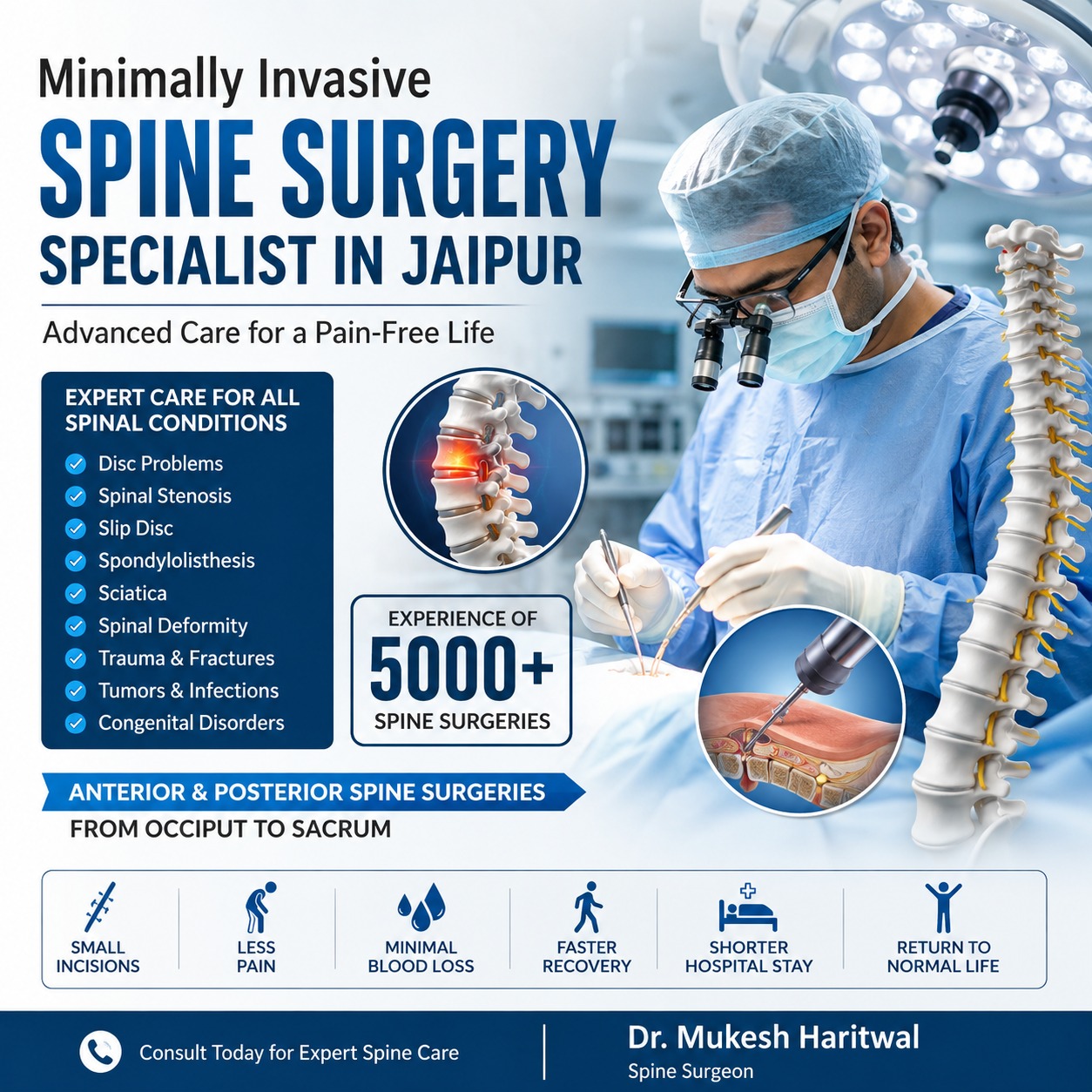
Minimally invasive spine surgery is an advanced surgical approach that may help eligible patients receive targeted treatment through smaller incisions and specialized techniques. The suitability of this approach depends on the patient's diagnosis, symptoms, medical history, and overall spinal health.
What Is Minimally Invasive Spine Surgery?
Minimally invasive spine surgery (MISS) uses specialized instruments and techniques to access and treat certain spinal conditions while minimizing disruption to surrounding muscles and soft tissues. Compared with some traditional open procedures, suitable minimally invasive techniques may offer benefits such as smaller incisions, reduced blood loss, less postoperative discomfort, and a potentially shorter recovery period.
However, outcomes vary depending on the procedure and individual circumstances. Not every spinal condition can be treated using a minimally invasive approach, making a thorough medical evaluation essential.
Conditions That May Require Spine Treatment
Spinal disorders can cause pain, stiffness, restricted movement, numbness, or weakness. Depending on the diagnosis, spine specialists may evaluate and treat conditions such as:
- Slip Disc: A herniated or slipped disc may irritate nearby nerves and cause back pain, neck pain, or radiating pain in the arms or legs.
- Sciatica: Compression or irritation of a nerve may produce pain that travels from the lower back into the leg.
- Spinal Stenosis: Narrowing of the spinal canal may place pressure on the spinal nerves and affect walking or everyday activities.
- Degenerative Disc Disease: Age-related changes in spinal discs may contribute to persistent discomfort and reduced mobility.
- Spondylolisthesis: A vertebra may slip out of its normal position, sometimes causing pain or nerve-related symptoms.
- Selected Spinal Nerve Compression Conditions: Certain cases involving compressed nerves may require specialist assessment to determine the most appropriate treatment.
Many spinal conditions can be managed without surgery. Depending on the diagnosis, treatment may include medication, physiotherapy, activity modification, or other non-surgical approaches.
Why Consult Dr. Mukesh Haritwal for Spine Care in Jaipur?
Choosing a spine specialist involves understanding the diagnosis, reviewing available treatment options, and discussing the expected benefits and risks of each approach. Dr. Mukesh Haritwal provides a point of consultation for patients seeking evaluation of spinal problems and guidance regarding potential treatment pathways.
A patient-focused approach to spine care may include:
- Careful assessment of back pain, neck pain, and nerve-related symptoms.
- Evaluation of relevant imaging and diagnostic reports.
- Discussion of conservative treatment and surgical options where appropriate.
- Explanation of the potential benefits, risks, and limitations of recommended procedures.
- Guidance on postoperative recovery, rehabilitation, and follow-up care.
The recommended treatment plan should always be tailored to the patient's specific condition and clinical needs.
Benefits and Considerations of Minimally Invasive Spine Surgery
For appropriately selected patients, minimally invasive spine surgery may provide several advantages:
Smaller Incisions: Certain procedures can be performed through smaller surgical openings.
Reduced Soft-Tissue Disruption: Specialized techniques may reduce injury to surrounding muscles and tissues.
Potentially Faster Recovery: Some patients may return to daily activities sooner than they would after comparable open procedures.
Less Blood Loss: Certain minimally invasive procedures may involve less blood loss.
Targeted Treatment: Specialized instruments and imaging guidance can help surgeons address specific spinal problems.
These benefits are not guaranteed. Recovery time and results depend on the procedure, the severity of the spinal condition, the patient's overall health, and adherence to medical advice.
When Should You Consult a Spine Specialist?
Consider seeking a professional evaluation if you experience persistent back or neck pain, recurring sciatica, tingling or numbness in your limbs, difficulty walking, or symptoms that interfere with everyday activities.
Seek emergency medical attention if you develop new loss of bladder or bowel control, numbness around the groin or saddle region, or rapidly worsening leg weakness, as these may indicate serious nerve compression.
Early assessment can help identify the cause of symptoms and determine whether conservative care, further investigations, or surgery should be considered.
Your Journey Toward Better Spinal Health
Successful spine care begins with an accurate diagnosis and a treatment plan suited to your needs. Whether your symptoms are related to a slipped disc, nerve compression, or another spinal condition, understanding your options can help you take the next step with confidence.
If you are searching for minimally invasive spine surgery in Jaipur, consult Dr. Mukesh Haritwal to discuss your symptoms, diagnostic reports, and potential treatment options. A specialist consultation can help you understand which approaches may be appropriate for your condition.