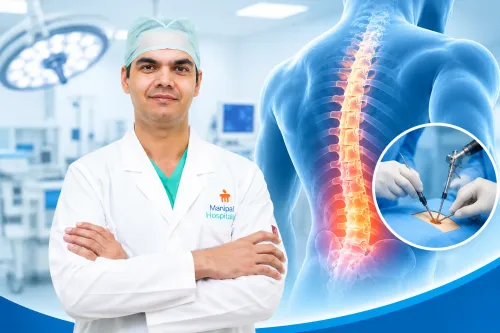


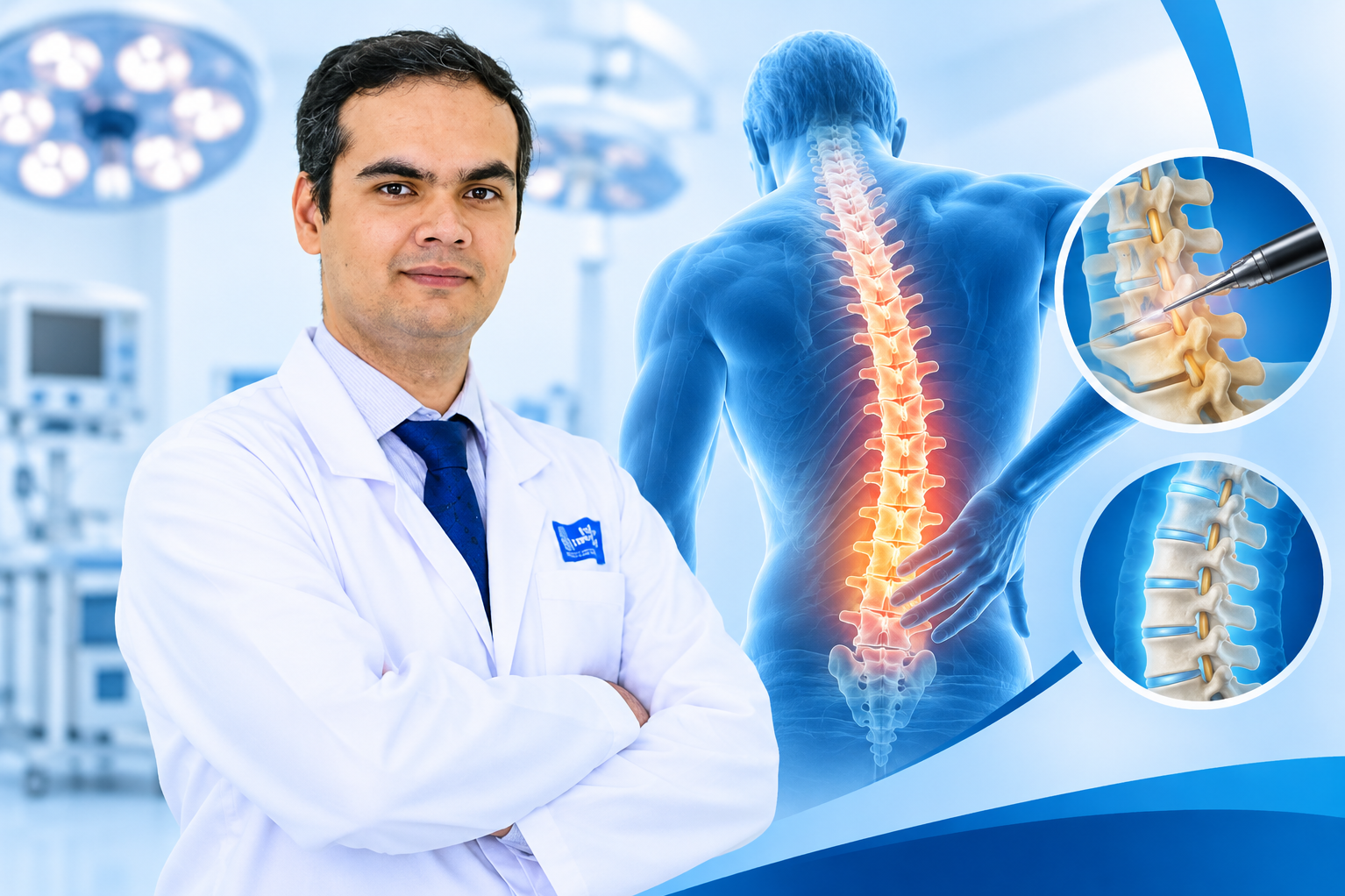
Minimally Invasive Spine Surgery Specialist | Dr. Mukesh Haritwal
Minimally Invasive Spine Surgery Specialist – Dr. Mukesh Haritwal
Spine conditions can affect mobility, daily activities, posture, and overall quality of life. From persistent back pain and slipped discs to spinal deformities, infections, fractures, and tumours, different spinal conditions require accurate diagnosis and an appropriate treatment approach. Minimally invasive spine surgery is one of the surgical approaches used to manage selected spinal disorders while aiming to reduce damage to surrounding muscles and soft tissues.
Dr. Mukesh Haritwal is a Spine Surgeon with experience of approximately 5,000 spine surgeries. He has experience in performing a wide range of anterior and posterior spine surgeries, covering the entire spine from the occiput (base of the skull) to the sacrum (lower end of the spine). His surgical experience includes the management of spinal trauma, deformities, infections, degenerative conditions, tumours, and congenital spinal disorders.
What Is Minimally Invasive Spine Surgery?
Minimally invasive spine surgery (MISS) refers to surgical techniques that use smaller incisions and specialised instruments to access and treat certain spinal conditions. Depending on the diagnosis and surgical requirements, these procedures may involve endoscopic techniques, tubular retractors, microscopes, and specialised imaging guidance.
Compared with conventional open surgery, minimally invasive techniques may help reduce muscle disruption, blood loss, postoperative discomfort, and hospital recovery time in appropriately selected patients.
However, not every spinal condition can be treated using a minimally invasive approach. The choice of surgery depends on the patient's condition, spinal anatomy, imaging findings, and overall health.
Conditions Managed by a Spine Surgeon
Dr. Mukesh Haritwal has experience in managing a broad range of spinal conditions, including:
1. Degenerative Spine Conditions
Age-related changes in the spine can lead to disc degeneration, spinal canal narrowing, nerve compression, and chronic back or neck pain. Depending on the condition, treatment may include conservative management or surgical procedures such as decompression, discectomy, and spinal fusion.
2. Spinal Trauma and Fractures
Spinal injuries can occur due to road accidents, falls, or other traumatic events. Some injuries may cause spinal instability or neurological complications. Surgical treatment may involve spinal fixation, decompression, and reconstruction, depending on the nature of the injury.
3. Spinal Deformities
Conditions such as scoliosis, kyphosis, and other spinal alignment abnormalities can affect posture, movement, and spinal balance. Treatment planning depends on the severity of the deformity, age, symptoms, and associated complications.
4. Spinal Infections
Spinal infections, including spondylodiscitis and vertebral osteomyelitis, can affect the vertebrae and intervertebral discs. Some cases require surgical removal of infected tissue, decompression of neural structures, or spinal stabilisation alongside appropriate medical treatment.
5. Spinal Tumours
Spinal tumours may develop within the vertebrae, spinal canal, or surrounding structures. Treatment depends on the tumour type, location, extent, and neurological involvement. Surgical management may include tumour removal, decompression, and spinal reconstruction when required.
6. Congenital Spine Disorders
Congenital spinal conditions are abnormalities present from birth. Some may affect spinal development, alignment, or neurological function. Management depends on the specific abnormality and its impact on the patient.
Types of Spine Surgeries
Depending on the patient's diagnosis and surgical requirements, different surgical approaches may be considered.
Anterior Spine Surgery: An anterior approach accesses the spine from the front of the body. It may be used for selected spinal fusion, reconstruction, deformity correction, and other procedures.
Posterior Spine Surgery: A posterior approach accesses the spine from the back. It is commonly used for spinal decompression, fixation, fusion, and deformity correction.
Endoscopic Spine Surgery: Endoscopic techniques use a small camera and specialised instruments to treat selected spinal conditions through small incisions. They may be considered for certain disc herniations and nerve compression conditions.
Spinal Fixation and Fusion: These procedures are used to stabilise spinal segments when there is instability, deformity, fracture, or other conditions requiring structural support.
Benefits of Minimally Invasive Spine Surgery
When clinically appropriate, minimally invasive spine surgery may offer several potential benefits:
- Smaller surgical incisions.
- Less disruption to surrounding muscles and soft tissues.
- Reduced blood loss in selected procedures.
- Potentially less postoperative discomfort.
- Shorter hospital stays in suitable cases.
- Earlier mobilisation and rehabilitation in some patients.
- Smaller surgical scars.
The benefits vary according to the procedure, underlying spinal condition, and individual patient factors. Minimally invasive surgery is not necessarily suitable for every patient.
When Should You Consult a Spine Surgeon?
A consultation with a spine surgeon may be necessary if you experience:
- Persistent back or neck pain.
- Pain radiating into the arms or legs.
- Numbness or tingling in the limbs.
- Muscle weakness.
- Difficulty walking or maintaining balance.
- Symptoms associated with spinal fractures or injuries
- Recurrent symptoms related to disc problems.
- Progressive spinal deformity.
Sudden leg weakness, loss of bladder or bowel control, or numbness around the groin or saddle region requires urgent medical evaluation.
Why Surgical Experience Matters in Spine Care
Spine surgery requires detailed knowledge of spinal anatomy, neurological structures, spinal biomechanics, and different surgical approaches. Complex spinal conditions may require procedures involving multiple spinal levels or a combination of anterior and posterior approaches.
Dr. Mukesh Haritwal has experience of approximately 5,000 spine surgeries and performs a wide range of anterior and posterior spinal procedures from the occiput to the sacrum. His surgical experience covers degenerative disorders, spinal trauma, deformities, infections, tumours, and congenital conditions.
Each patient's treatment plan should be based on clinical examination, radiological findings, medical history, and individual treatment requirements.
Frequently Asked Questions:
1. What does a minimally invasive spine surgery specialist do?
A minimally invasive spine surgery specialist evaluates spinal conditions and performs suitable surgical procedures using techniques designed to minimise disruption to surrounding muscles and soft tissues.
2. Which conditions can be treated with minimally invasive spine surgery?
Selected cases of slipped disc, lumbar disc herniation, spinal stenosis, nerve compression, and certain degenerative spine conditions may be treated using minimally invasive techniques.
3. Is minimally invasive spine surgery better than open spine surgery?
Both approaches have specific indications. Minimally invasive surgery may offer benefits such as smaller incisions and reduced tissue disruption, while complex conditions may require conventional or combined surgical approaches.
4. How many spine surgeries has Dr. Mukesh Haritwal performed?
Dr. Mukesh Haritwal has experience of approximately 5,000 spine surgeries, including procedures involving different regions and conditions of the spine.
5. Does Dr. Mukesh Haritwal perform anterior and posterior spine surgeries?
Yes. He has experience in performing both anterior and posterior spine surgeries, covering the spine from the occiput to the sacrum.
6. Can spinal infections be treated with surgery?
Some spinal infections, such as spondylodiscitis, may require surgery, particularly when there is spinal instability, neurological compression, an abscess, or a lack of response to appropriate medical treatment.
7. When is spinal fusion recommended?
Spinal fusion may be recommended when spinal stability needs to be restored, such as in selected cases of degenerative disease, fractures, deformities, or spinal infections.
Consult Dr. Mukesh Haritwal for Spine Care
If you are experiencing persistent back pain, neck pain, nerve compression symptoms, spinal deformity, or other spine-related problems, an evaluation by an experienced spine surgeon can help determine the appropriate treatment options.
Dr. Mukesh Haritwal is a Spine Surgeon with experience of approximately 5,000 spine surgeries and expertise across a broad range of anterior and posterior spinal procedures, from the occiput to the sacrum.